Wednesday, February 8, 2012

Trekking in Nepal: Prologue

Pokhara, NEPAL: 1 - 7 Feb. 2012

Once I got to Nepal I had to make several decisions about trekking:

Where? Nepal is synonymous with top class trekking, so it was hard to choose where to start. In the end I went for the three-week Annapurna Circuit. It has oft been called the "best trek in the world", but recent and future road building threatens this status. So I thought I should walk it now that I had the time and before the road encroaches too much.

When? Peak trekking season in Nepal is October and November, with the low season corresponding to the summer monsoons. I arrived in Nepal in January, the middle of winter. Not many people trek the Annapurna Circuit in January and February because of the cold and snow, which can often cause the Thorung-La Pass (the high point on the circuit) to be unpassable. While that risk is the disadvantage of trekking in winter, the advantage is the avoidance of the crowds of peak season. I decided to wait until a week into February before starting, hoping that the weather might get a bit warmer.

With whom? While many people trek in Nepal with guides and/or porters (the sight of porters carrying huge bundles on their backs held in place with a strap on their foreheads is one of the defining images of trekking here), I wanted to do it independently. But for safety I didn't want to trek alone, So through a trekking website, which felt like a form of internet dating, I teamed up with Aly from England and Laura from Germany. As Aly wasn't able to start for a few days, I had time to spare, leading to another question:

What to do while waiting to begin a long trek? Simple, do a short trek! With the son of the owner of the guesthouse where I was staying in Pokhara, whose name Sagar means ocean, which is something that he, like most Nepalis, has never seen, I went on an enjoyable three-day trek. While the days walking passed fields filled with mustard-seed with views of the Annapurna mountains in the distance were enjoyable, the experience of spending a night in Sagar's home and a night in his uncle's home made this "mini-trek" a memorable experience.Other homstays that I have done, in Mexico, Bolivia and Vietnam, were more like staying in a B&B (the Irish equivalent of a "homestay") than staying with a family. But this was different. The first evening I sat in front of the house watching the world go by (i.e. a few old men using discarded trekking polls as walking sticks, and women carrying wood down from the forest) with newly-hatched chicks under a wicker basket to my left and Sagar's 74 year old grandmother stripping sheaths of corn to my right. While Sagar's mother prepared dhal bhat (the staple Nepali meal of rice and vegetables) in the smokey kitchen behind me, their goat gave birth to male twins (I learned that male goat meat is tastier and therefore more valuable).I was thankful for this fascinating though brief insight into rural Nepali life.When I came back from that short "homestay trek", I had been in Nepal for three weeks, so I was now eager to start one of Nepal's great treks - the Annapurna Circuit.

Thursday, February 2, 2012

Back to backpacking

Kakarbhitta, Kathmandu, Sauraha (Chitwan National Park), NEPAL: 18 - 31 Jan. 2012

Although Darjeeling is near the Nepal border, getting to Kathmandu turned into a bit of a mission. To get to the nearest crossing that can be used by foreigners, my travelling companions (Denna and Helly) and I took a three-hour shared jeep ride and a one-hour bus journey. We filled out the immigration forms by candlelight and then entered the twenty-sixth country I've visited since starting my career break in September 2009.

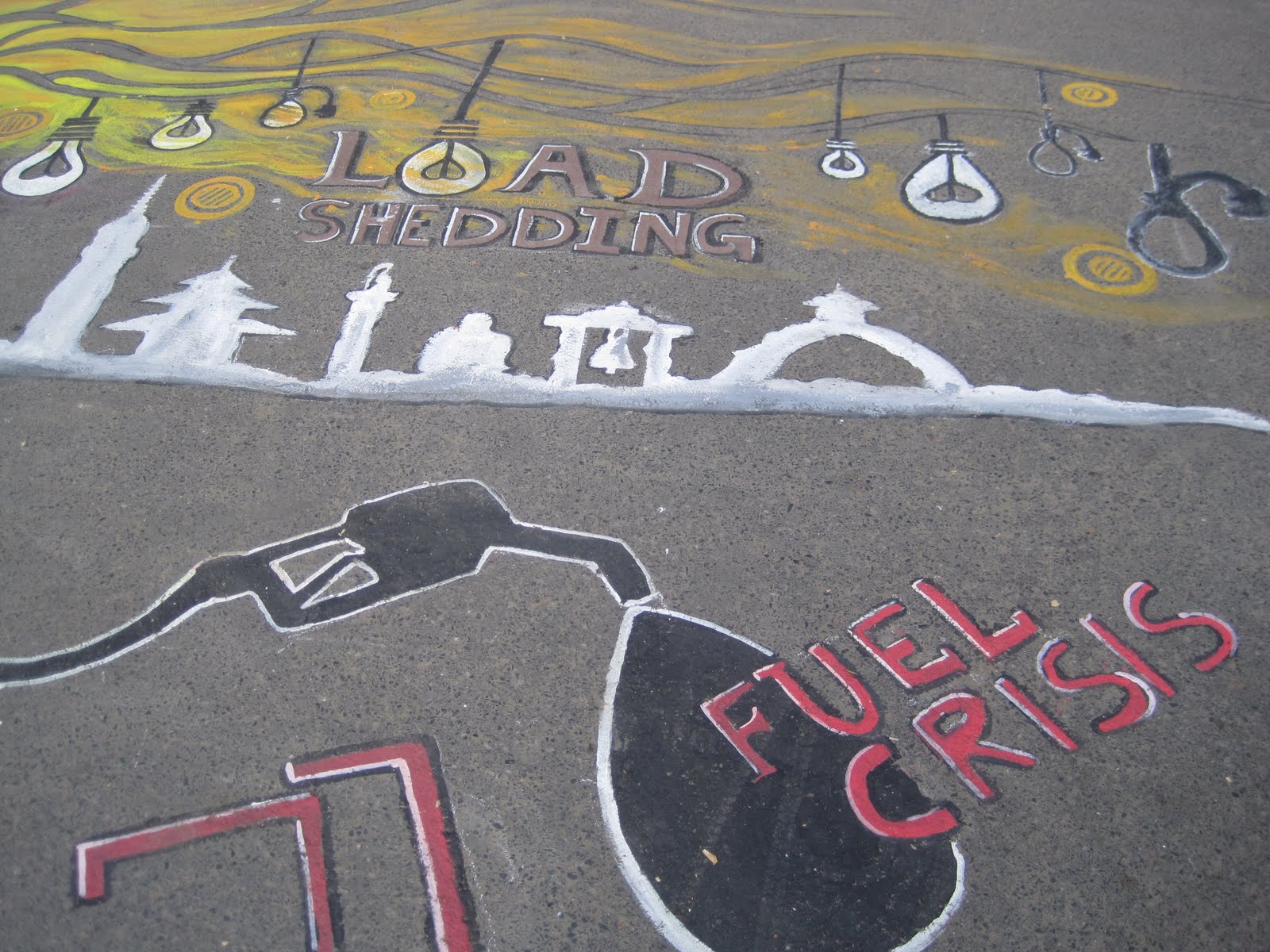
After spending the night at the border town of Kakarbhitta, the plan for the next day was to be driven in a jeep to Kathmandu. Frustratingly, that 600 kilometre trip ended up taking twenty hours because we were stuck from 9am until 4:30pm at a roadblock that was set up in what seemed like the middle of nowhere by locals angry at a recent government decision. This sort of thing is common in Nepal, so the locals just relaxed, waited and asked "What to do?" in a rhetorical rather than a solution-searching way.There was another strike during one of our days in Kathmandu, meaning all businesses stayed closed until the evening. This was organised by students in protest against high gas prices and "load shedding" (the policy where the electricity supply is turned off for up to 18 hours a day for different areas at different times).The Thamel area of Kathmandu reminded me of other tourist hotspots on the world's backpacker circuit. Like Cusco in Peru and Siem Reap in Cambodia, it is filled with Western bars and restaurants, souvenir sellers, internet cafes, travel agents and trekking shops. While obviously this is not the "real" Nepal, we enjoyed treating ourselves to things unavailable in Darjeeling, like falafel wraps and decent pizza. Spending a week with Denna and Helly in Kathmandu, which was a fun and easy reintroduction to backpacking, highlighted how different it is to travel in a group compared to going alone. Because we did not need to, we didn't interact with any other travellers. But when the girls left to return to Darjeeling, I quickly reverted to being the sociable solo traveller - I chatted with three Irish sisters on the six hour bus journey to Chitwan National Park, and once there I teamed up with a Polish girl for an elephant ride and a one and a half day jungle walk.

We set off on that walk after a three minute briefing from our guide: "If a sloth bear attacks, make yourself big and be loud; if a rhino charges, run in zigzags and hide behind a big tree; if you see tiger, keep eye contact and back away slowly". While we saw lots of animals, including rhinos, wild pigs, and several types of deer and birds, as far as we know the closest we came to a tiger was seeing a footprint in the mud.

But the main reason why I had wanted to come to Nepal was to trek. So after an enjoyable day cycling around the villages near Chitwan, I hit for Pokhara - the lakeside town overlooked by the Annapurna range.

Sunday, January 22, 2012

My Winter in Darjeeling

Darjeeling, INDIA: 5 - 17 Jan. 2012
At just over ten weeks, my time in Darjeeling was relatively short. But it was long enough for me to enjoy being settled in one place, to get to know some very nice people, and to grow fond of lots of the little things that make Darjeeling special.

Such things include: the rows of potted plants decorating the front of most homes; groups squatting around small fires on the streets in the evenings; people wearing fake North Face jackets; the smiling legless beggar who appears to rise directly out of the ground; the horse stables just off the main square; the rows of tiny raised stalls where sellers sit cross-legged all day among their wares of gloves, woolly hats and pashminas; children of all ages playing badminton on the streets; enjoying a hair cut, shave and head massage all for less than one euro; the monkeys at the temple atop the central Observatory Hill who groom each other in much the same way as the women pick at each other's hair; cashiers giving sweets to customers instead of small change; the way people talk with their love of emphasis ("these momos are SOOOO tasty") and the common refrain "la, la, la"; and the mountain views which I never tired of appreciating.

Of course, a major reason why I'm happy with my winter in Darjeeling is that my volunteering position at the Edith Wilkins Street Children Foundation worked out well. I was impressed with the life-changing help that EWSCF gives to a large number of children and I'm grateful that I had the opportunity to play a small part. My role involved spending more time helping in the office than I had thought that I wanted to do. Although at times that meant doing things like photocopying and data entry, I felt that the office was the place where I could be of most benefit. I was therefore happy to help out there.

I didn't feel ready to leave Darjeeling, but my soon-to-expire visa meant it was time to go. I guess its not a bad thing to leave a place while the going is still good. And thankfully I wasn't leaving alone as two friends who live in Darjeeling (Denna from the US and Helly from New Zealand) were also going to Kathmandu, so we hit for Nepal together.

By the way, for those of you who associate being in India with suffering "Delhi belly", I'm pleased to report that, apart from a cold, I was happily healthy during my three months there. (What happened after having a cheese-burger in Kathmandu is another story - be glad that not everything is included in my blog!)

Friday, January 6, 2012

Rhinos & Elephants, Bagpipes & Bodybuilders

Siliguri, Jaldapara Wildlife Sanctuary, Darjeeling, INDIA: 26 Dec. 2011 - 4 Jan. 2012

Just like when I spent Christmas in Bolivia two years ago, the biggest difference that I found between Christmas in Darjeeling and in Ireland is that here it is just a one-day event. Unlike Ireland, my life here immediately returned to normal after the 25th. This meant going back to work, and back to playing cricket with the boys.And as in Bolivia where I spent New Years in the obscure city of Oruro, I counted down to 2012 in the equally unattractive city of Siliguri (by the way, the New Years in between was spent in Ballincollig). A big group of us had a fun night of watching our friends' band, dancing in a rocking bar, and singing at a house party - sometimes life in India isn't too different from Ireland.

Siliguri, which is the commercial and transport hub for this region, is a three-hour jeep ride but a world away from Darjeeling. It is warmer (as it is down in the plains) and a lot more hectic, with rickshaws zooming around the busy streets. In other words, it is like all the other places that I've been to in India, apart from Darjeeling. Going to Siliguri showed me how used to life in Darjeeling I have become.

I spent the first night of 2012 in Jaldapara Wildlife Sanctuary, where I went on an elephant ride and saw a few wild one-horned Indian rhinoceros.A train and a jeep ride brought me back up to Darjeeling, where the "Tea and Tourism Festival" was still in full swing. That meant that in one afternoon I was at a dog show, I watched a tartan-wearing, bagpipe-playing Gurkha band,and, most bizarrely, I went to the "Himalayan Classic Bodybuilding Competition".It was a hectic but fun start to 2012 - the final year of my career break!

Monday, December 26, 2011

Christmas in Darjeeling

Darjeeling, INDIA: 22 - 26 December 2011

Christmas week in Darjeeling coincided with the start of the "Tea and Tourism Festival". While this meant a lot of bad live music (e.g. Nepali heavy metal bands) and worse pun-filled posters (e.g. "feastiviteas"), it gave a good buzz to the town.This helped create a Christmas atmosphere, which was especially welcome since most people in Darjeeling are Hindu or Buddhist. However, there are many Christians too, thanks to a history of Catholic missionaries (still today the best school are Catholic-run and I've met several people who have told me that they were taught by Irish priests and nuns) and a more recent wave of Protestant Evangelicals.

Cath, my flatmate from Tralee, and I spent a few hours on Christmas Eve at the Edith Wilkins Street Children Foundation wrapping around 250 present for the kids, which was a great way to get into the Christmas spirit. Christmas Day itself was event-filled, fun and very memorable. I spent the morning at the EWSCF centre. Although only some of the children and staff are Christian, the big festivals from all the main religions here are celebrated at the centre. All the children and staff gathered to sing carols, perform plays, dance and eat – people in India are experts at feeding large numbers.For lunch we joined some of our neighbours: Mike and Denna from the US; Heli from New Zealand; Mark from Canada; and Dipong and Sweta from Darjeeling.The food was delicious, and the mulled wine, Irish coffees and general merriment continued until after midnight.

My Christmas in Darjeeling is certainly one that I won’t forget.

Wednesday, December 21, 2011

Why have...when you can...?

Darjeeling, INDIA

To live in Darjeeling, one must do without certain things that are taken for granted in Ireland. Since being here I have realised that there is much that is unnecessary:

Why have a tumble-dryer when you can dry your clothes on your roof?Why have enclosed places to dump rubbish when leaving it on the street means that dogs can eat discarded food?Why have a cricket ball and wickets when waste paper bound by a rubber band and some blocks can be used instead?Why have central heating when a hat, scarf and hot water bottle can keep you warm? (The bizarre picture below contains the three most important things that I have with me here.)Why have McDonalds when you can eat momos? These tasty dumplings, usually filled with onion and cabbage, are my new favourite take-away food. I learned to make them last weekend while staying on an organic farm in the valley below Darjeeling.Speaking of which, why have Ryanair when a great, peaceful, interesting weekend break can be enjoyed simply by walking two hours down into the valley?

Darjeeling may not have everything that you think you might need, but it sure has a lot going for it.

Friday, December 2, 2011

Everest Gazing

In and around Singalila National Park, INDIA & NEPAL: 23- 26 Nov. 2011

Just as with its electricity and water supply, Darjeeling's weather is unpredictable. Coming after the monsoon season and before the very cold winter, the months of October and November are generally thought to be the best time to come to Darjeeling for trekking when promises of clear skies offer the best chance to take-in the views of snow-capped mountains. But after a sunny first week, my second week in Darjeeling was a total white-out. The town was engulfed in clouds, the mountains disappeared, and scores of disappointed trekkers were stuck drinking tea and waiting.

So when the weather dramatically improved in the last week of November, I was told that this was the perfect opportunity to go on the four-day trek to Sandakphu (3636 mts) in Singalila National Park. And perfect it turned out to be. I had amazing views of the Himalayas, culminating in getting close to Kanchenjunga and in clearly seeing Mt. Everest. The changing colours that occurred at sunrise and sunset made it extra special.
Apart from the mountains, I experienced many other interesting sights as I criss-crossed the India-Nepal border (my first night was spent in Nepal).From having a noodle-soup lunch in a smoky house with dried yak meat hanging above me from wooden beams, to stopping for tea and a sit down in the sun in the tiny villages I passed through, I had many fascinating glimpses into life in this high altitude border region. While I didn't find the trek all that difficult, partly because I stayed in basic lodges along the way where food was provided meaning that I only had to carry a small backpack, it certainly was a great experience.